Source Semi-Fixed Blade Polishing Power Trowel for Concrete
Find and compare 30 semi-fixed blade polishing power trowel options from Chinese manufacturers. Evaluate key specs like engine power, productivity, and weight to select the right concrete leveling equipment for your construction projects.
Key considerations
Products List


Heavy-Duty Concrete Power Trowel with 600mm Steel Blade for Precision Finishing
$339.00 - $450.00
MOQ: 1 Pieces


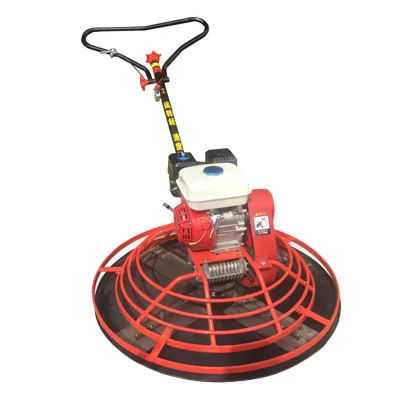


Compact Ride-on Power Trowel for Superior Concrete Finishing
$2611.00 - $4849.00
MOQ: 1 Pieces
Shandong Roadway Construction Machinery Manufacturing Co., Ltd.


Multi Purpose Ride-on Power Trowel with Grinding Function for Floor Polishing
$8395.00 - $11075.00
MOQ: 1 Pieces

Fast Speed Ride-on Power Trowel with 165rpm Blade Speed for Floor Finishing
$8395.00 - $11075.00
MOQ: 1 Pieces

High Speed Ride-on Power Trowel with 165rpm Blade Speed for Fast Finishing
$8395.00 - $11075.00
MOQ: 1 Pieces

Stable Performance Ride-on Power Trowel with 10 Blades for Floor Smoothing
$8395.00 - $11075.00
MOQ: 1 Pieces

High Performance Ride-on Power Trowel with 10 Blades for Concrete Grinding
$8395.00 - $11075.00
MOQ: 1 Pieces


Comprehensive Sourcing Guide
Semi-Fixed Blade Polishing Power Trowel Sourcing Guide
The semi-fixed blade polishing power trowel represents a specialized class of concrete finishing equipment designed for high-efficiency surface leveling and smoothing in industrial and commercial construction projects. These machines utilize a rotor-type structure with semi-fixed blades to ensure consistent contact with the concrete surface, reducing the risk of uneven finishing that can occur with fully adjustable or floating blade systems. The observed market data indicates that these units are typically powered by single-cylinder, four-stroke air-cooled engines, with horsepower ratings generally falling between 5.5 and 6.5 HP for smaller models, while larger industrial variants may feature higher output engines like the 13HP Honda Gx390.
Procurement decisions for this equipment must account for the specific operational requirements of the job site, particularly regarding the working diameter and productivity rates. Listings show working diameters ranging from 980mm to 1000mm, with productivity capabilities observed between 180 and 240 cubic meters per hour depending on the model configuration. Buyers should prioritize machines that align their feeding height and vibrating amplitude with the specific concrete slab thickness and finish quality standards required for the project, ensuring the selected unit can handle the volume of work without compromising surface integrity.
Product Scope and Observed Listing Signals
The product scope for semi-fixed blade power trowels encompasses a variety of configurations tailored to different concrete pavement leveling needs, ranging from compact wheeled units to larger walk-behind graders. Observed listings reveal distinct variations in structure, with some models featuring a rotor type design optimized for specific blade angles between 0 and 15 degrees, while others are classified as small graders with power transmission systems. The color of these machines is often a distinguishing feature, with orange and yellow being the most common finishes, though some suppliers offer color options to match fleet standards or site safety requirements.
When evaluating listings, buyers must scrutinize the specific model identifiers and packing standards to ensure the equipment matches the intended application. Models such as the SAPT01, DMR1000D, and JS436A appear in the market, each with unique specifications regarding their shape size, blade dimensions, and engine brands like Loncin, Lifan, or Honda. The packaging varies significantly, with options including cartons with steel frames, wooden boxes, or wooden packages, which directly impacts shipping costs and the protection of the machinery during transit from origins in Jiangsu, Henan, or Shandong provinces in China.
Technical Specifications to Verify
Technical verification begins with the engine and power transmission system, as these components dictate the machine's ability to maintain consistent running speeds and torque under load. Buyers should confirm that the engine type matches the operational environment, noting that air-cooled single-cylinder engines are standard, but specific brands like Honda or B&S may offer different reliability profiles. The running speed, observed in the range of 0 to 126 RPM, must be adjustable to accommodate different concrete curing stages, and the transmission system should be verified as a power transmission type to ensure efficient energy transfer to the rotor blades.
The physical dimensions and structural integrity of the trowel are critical for both maneuverability and finishing quality. Key specifications to verify include the working diameter, which impacts the coverage area per pass, and the feeding height, which ranges from 1370mm to 1400mm in observed models and affects operator ergonomics. Additionally, the vibrating amplitude, observed at values such as 0.8mm or 2.4mm, plays a crucial role in the consolidation of the concrete surface, and the blade angle must be checked to ensure it can be set within the 0 to 15-degree range required for the specific leveling task.
Compliance and Safety Documentation
Compliance documentation is a non-negotiable aspect of sourcing industrial power trowels, with CE certification appearing as a primary standard for equipment originating from China. Buyers must request valid CE certificates that specifically cover the model being purchased, as the certification status is often tied to specific product attributes like color or engine configuration. The presence of ISO9001 certification for the manufacturing facility further validates the supplier's commitment to quality management systems, ensuring that the production process adheres to international standards for consistency and safety.
Safety documentation extends beyond certifications to include detailed operational manuals and maintenance guides that address the specific risks associated with high-speed rotating blades. The observed standard for some models lists dimensions like 16908601190mm, which may be part of the safety clearance requirements or packaging standards, but the primary focus must be on the machine's adherence to safety regulations regarding moving parts and operator protection. Buyers should verify that the supplier provides clear instructions on the safe operation of the semi-fixed blade mechanism, including how to adjust the blade angle and manage the vibrating amplitude to prevent accidents during the leveling process.
Cost Drivers and Commercial Terms
The cost of a semi-fixed blade polishing power trowel is driven by a combination of engine quality, structural complexity, and the specific configuration of the rotor and blade system. Prices in the observed market range widely from approximately $6.99 to $11,075, reflecting the difference between basic models and heavy-duty industrial units with advanced features like power transmission and specific engine brands. The operating weight, observed between 95kg and 110kg, also influences the price, as heavier machines often require more robust frames and higher-capacity engines to maintain performance.
Commercial terms such as Minimum Order Quantity (MOQ) and lead times are significant factors in the procurement strategy, with observed MOQs ranging from 1 to 50 units. Buyers should negotiate based on the total volume required, as larger orders may unlock better pricing tiers or more favorable shipping terms. The packing method, whether in a carton with a steel frame or a wooden box, also affects the final landed cost, as heavier or more complex packaging increases freight charges and handling fees, which must be factored into the total cost of ownership.
Supplier Qualification and Quality Control
Supplier qualification requires a thorough assessment of the manufacturer's location and production capabilities, with key origins identified in Jiangsu, Henan, and Shandong provinces in China. Buyers should verify the supplier's ability to provide consistent quality control, as evidenced by their adherence to standards like CE and ISO9001, and their capacity to produce units with the specific technical attributes observed in the market. The condition of the product, listed as "New," should be confirmed through factory audits or third-party inspections to ensure that the machinery is not refurbished or reconditioned without disclosure.
Quality control measures must include a detailed review of the machining process, which is observed to be hydraulic in some models, ensuring that the structural components are manufactured with precision. The customization availability noted in the listings suggests that suppliers can adapt certain features to meet specific buyer requirements, but this must be managed through clear technical agreements to avoid deviations from safety and performance standards. Buyers should establish a protocol for pre-shipment inspections that verifies the engine brand, blade dimensions, and overall structural integrity before the equipment leaves the factory.
Long-Term Procurement Checks
Long-term procurement success depends on the availability of spare parts and the durability of the semi-fixed blade system over extended periods of use. Buyers should verify the supplier's commitment to providing replacement parts for critical components such as the rotor, blades, and engine, ensuring that the machine can be maintained without significant downtime. The observed productivity rates of 180 to 240 cubic meters per hour indicate that these machines are designed for high-volume applications, making the reliability of the engine and transmission system paramount for sustained performance.
Future-proofing the procurement strategy involves monitoring the evolution of standards and certifications that may impact the operation of the equipment in different markets. As regulations evolve, buyers must ensure that their fleet remains compliant with local safety and environmental standards, which may require upgrades or modifications to the existing machinery. Establishing a long-term relationship with a qualified supplier who can provide ongoing technical support and updates on product improvements will help mitigate risks associated with equipment obsolescence and ensure the continued efficiency of the concrete leveling operations.
FAQs
What is the productivity of the semi-fixed blade polishing power trowel?
The productivity reaches up to 240 cubic meters per hour for specific models. Other variants offer 180 cubic meters per hour depending on the engine power and rotor configuration selected for your project needs.
Which engine types are available for this power trowel?
Available engines include air-cooled single-cylinder four-stroke units with 5.5 to 6.5 horsepower. Some models specifically utilize Honda Gx390 engines or options from Loncin, Lifan, and Honda brands for reliable performance.
Can I customize the color of the semi-fixed blade polishing power trowel?
Yes, customization is available for the product color, with options including orange and yellow. Some listings also indicate that color selection is optional to meet specific branding or site requirements.
What is the operating weight of the semi-fixed blade polishing power trowel?
The operating weight is approximately 95 kilograms for the rotor type model. Another variant weighs 110 kilograms, reflecting differences in structure, engine size, and overall component density.
How is the semi-fixed blade polishing power trowel packed for shipping?
Packaging options include cartons with steel frames, wooden boxes, or wooden packages. Specific models may use carton or wooden packing to ensure safe transport of the machinery during international shipping.
What certifications does the semi-fixed blade polishing power trowel hold?
The product holds CE and ISO9001 certifications for quality and safety compliance. These standards ensure the machinery meets international requirements for construction equipment used in concrete pavement leveling applications.
What is the working diameter of the semi-fixed blade polishing power trowel?
The working diameter is 1000 millimeters for the rotor type model. Another specification lists a working diameter of 980 millimeters, indicating slight variations between different model series available.